

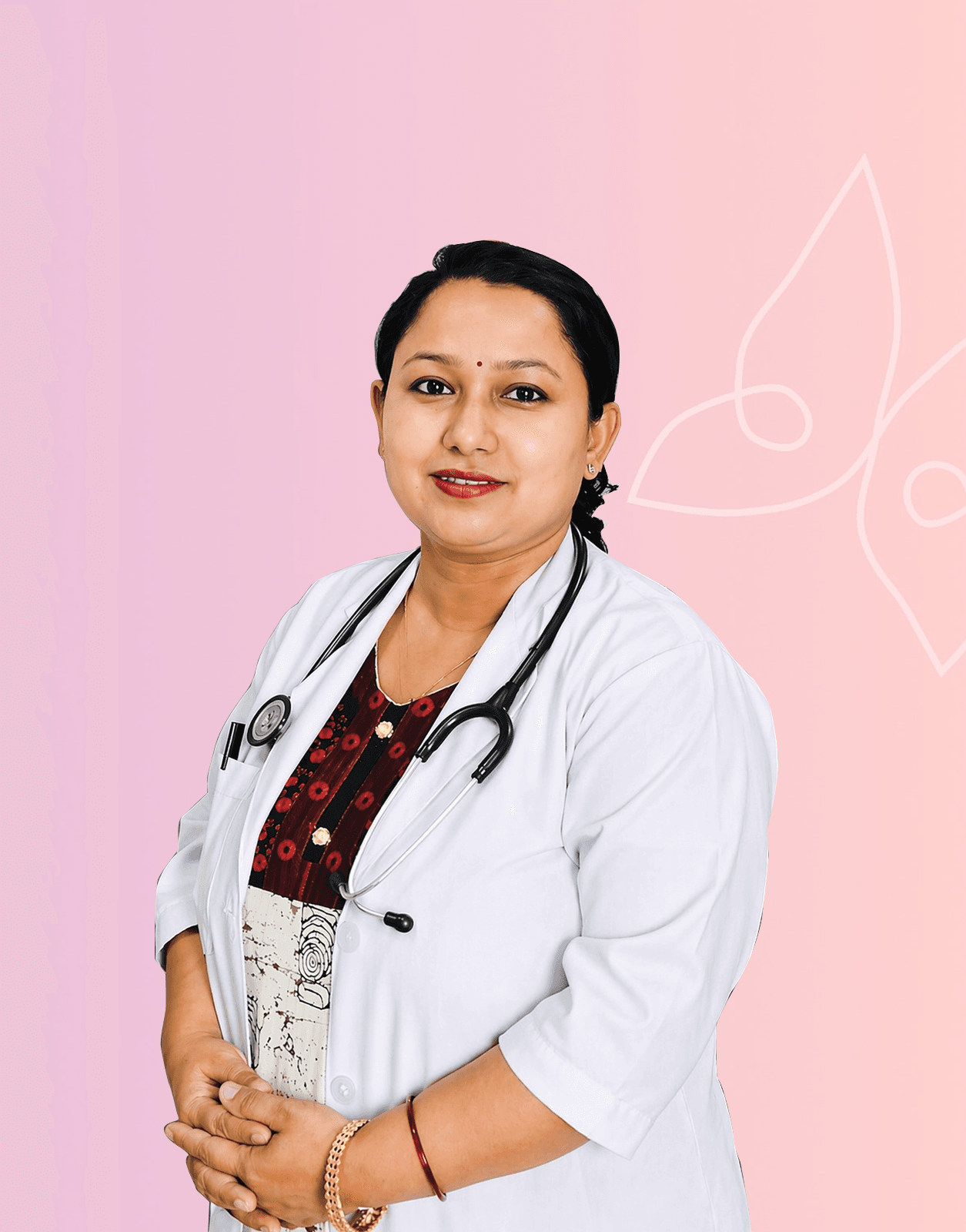

Dr.Subha Shrestha
Fertility Specialist
Meet Dr Subha Shrestha, a Consultant Obstetrician, Gynaecologist, and Reproductive Medicine & IVF Specialist who brings an incredible 15-year legacy of clinical excellence to our team.
Dr Shrestha is a powerhouse in the field of fertility. She has directly managed over 1,000 complex infertility cases, earning a stellar reputation for turning things around even in previously failed IVF cycles. Her approach is perfectly systematic, deeply evidence-based, and focused entirely on customised cycle optimisation for every unique patient. Beyond her direct fertility work, she possesses extensive institutional experience managing high-risk obstetrics and complex gynaecological cases from her tenures at Lumbini Medical College and the College of Medical Sciences, Bharatpur.
Her elite medical expertise is backed by rigorous training from top-tier institutions in Nepal and India. After completing her MBBS and MD from Kathmandu University, she accomplished a prestigious Fellowship in Reproductive Medicine & IVF at Indira IVF in India. Always staying ahead of the curve, she has completed advanced certifications in Reproductive Endocrinology and Infertility with the American College of Obstetricians and Gynaecologists (ACOG), Advanced Life Support in Obstetrics, and safe abortion services.
Today, as an active member of the Nepal Society of Obstetricians and Gynaecologists (NESOG), Dr Shrestha regularly participates in global fertility forums to bring the latest medical advancements to her patients. True to her patient-first philosophy, she frequently steps outside the clinic walls to lead reproductive health education initiatives and volunteer at free women's health camps across the community.
Services Offered

Fertility Preservation
The desire to give birth to your child has become an increasing real option for the patients surviving cancer treatment or under-going different medical therapies. With the introduction of fertility preservation, the couple today have started taking up the decision of late pregnancy.
While on the other hand, women go for fertility preservation for several reasons including damage to ovaries or due to constant exposure to toxic chemicals, while men take the treatment if wanting to go for vasectomy procedures or any other radiated treatment.
Hence, preserving a protective tissue through fertility preservation can prevent the scenario of child-bearing delays and its associated complications.